
Water-Based vs Plastisol Ink: Why We Recommend Water-Based for Brand Merch
Adian Buys ·
Water-based ink soaks into the fabric for a soft, matte print people keep reaching for; plastisol sits on top and wins on opacity. Here is when each one makes sense, and why we print purely with water-based inks at Screens.ink.
Having worked with both types of ink, we now work purely with water-based inks in our studio at Screens.ink. Most print studios shy away from this, because water-based ink is such a hassle to work with — unless you work in a dark, moist cavern.
The short answer
You should choose water-based ink when the feel and quality of your merch matter. It soaks into the fabric rather than sitting on top, especially when printing on lighter shirts. That's exactly why we print with water-based ink at Screens.ink.
Plastisol, the ink most commonly used in screen printing, still has real strengths. It's opaque, flexible and easy to run. But if you want a T-shirt people keep reaching for, we think softness and feel are worth prioritising.
Water-based vs plastisol at a glance
- Where the ink sits — water-based soaks into the fabric; plastisol sits on top of it.
- Feel — water-based is soft, often barely noticeable on light fabric; with plastisol you can feel where the print starts and stops.
- Look — water-based is matte and more integrated; plastisol is vivid and opaque.
- Main ingredients — water-based uses water, pigments and binders, sometimes co-solvents; plastisol is typically PVC resin and plasticisers.
- Best fabrics — water-based loves cotton, especially white and light colours; plastisol works across most fabrics, including polyester.
- Dark garments — water-based needs a white base or discharge; plastisol needs a white base too, but opacity comes more easily.
- Production — water-based can dry in the screen, so it needs more care; plastisol stays workable until heated.
Why choose water-based ink for your brand's merch?
1. It feels better to wear
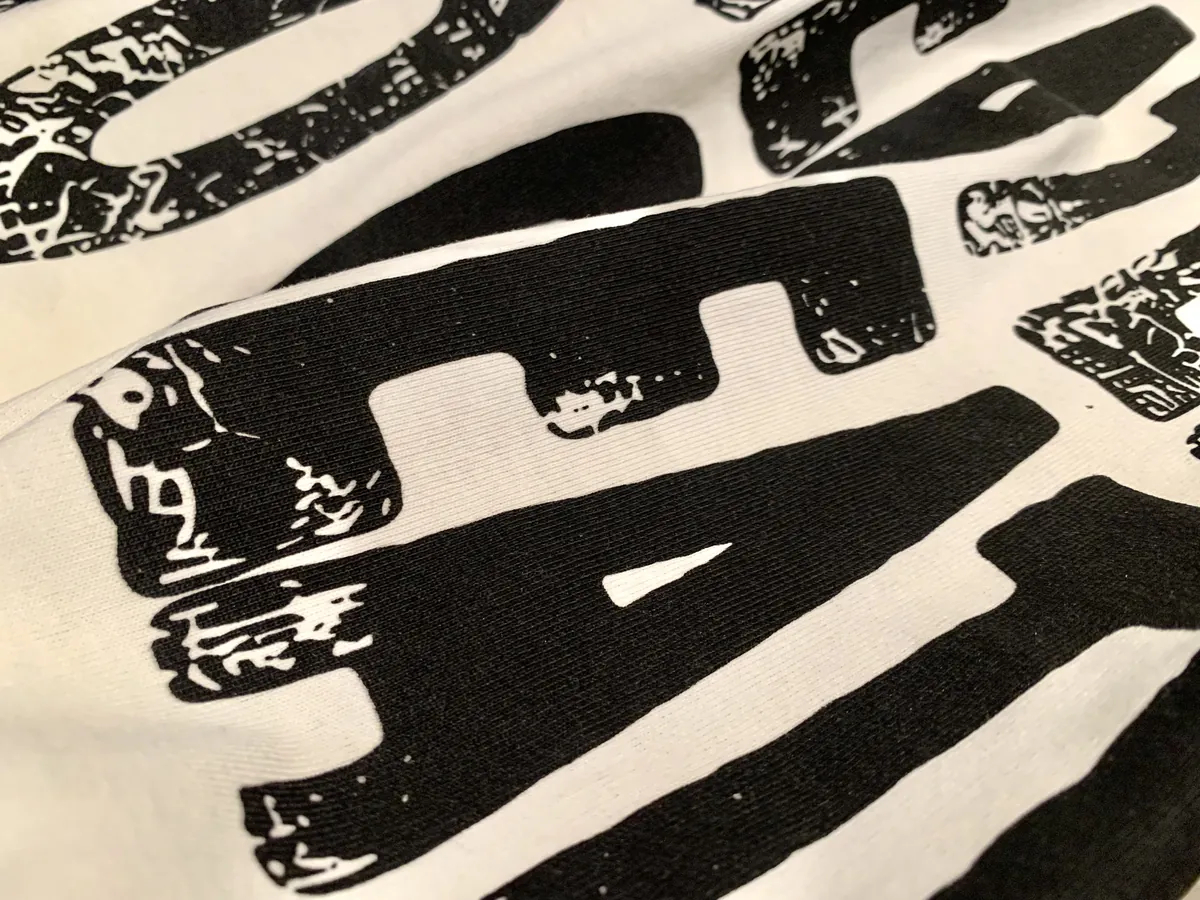
Water-based ink is known for its softness because the pigment soaks into the fabric, while plastisol sits on top. On a white or light garment, you can run your hand over the print and struggle to tell where the ink begins and ends.
For a brand, that matters. People notice how a shirt feels every time they put it on.
2. Your print becomes part of the garment
A water-based print doesn't leave the same layer sitting on top of the shirt. This gives you a natural, matte look that works well for fashion pieces and vintage-inspired designs.
3. It suits fashion-led merch
Water-based ink is increasingly popular for fashion blanks. If your merch sits alongside a clothing line, or you want people to wear it beyond one event, the print should feel as considered as the garment.
4. You avoid PVC in your ink
Traditional plastisol is PVC-based. Water-based inks don't contain PVC or phthalates, according to the UK sustainability organisation WRAP.
When is plastisol the better choice?
Plastisol may suit you better if you need very bright, opaque colours, are printing on polyester or performance fabrics, or need very long production runs. It's versatile, widely available and easier to work with.
How do you get the best result with water-based ink?
- Choose the right garment: cotton is the natural match, and white or light colours give the softest result.
- Design with the ink in mind: expect a more matte, integrated look than plastisol.
- Plan for dark garments: a white base adds some feel, and discharge is another route. You can also use high-opacity water-based inks.
- Work with a printer who cures it properly: water-based ink needs more time to cure, at a lower temperature. Proper curing is what helps the print last.
- Ask for a sample: this lets you check the colour and feel on your actual garment before a full run.
Frequently asked questions
Is water-based ink better than plastisol?
It depends on what you value most. Water-based ink is better for a soft, integrated feel. Plastisol is often better for maximum opacity and printing on synthetic fabrics.
Does water-based ink wash out?
A properly cured water-based print is made to last through regular washing. When it's properly heat pressed with the right equipment — which we have — it will last hundreds of washes without cracking like plastisol-based prints.
Can you use water-based ink on black shirts?
Yes, but it takes more planning. Dark garments need a white base or discharge, and the result may feel or look different from a print on a white shirt.
Is water-based ink eco-friendly?
Not automatically. Water-based ink doesn't contain PVC, but its overall impact depends on the formula, energy use, waste and how the printer handles the process. Ask your printer for specifics rather than relying on the name.
Want to feel the difference?
If you're planning merch for your brand, send us your design. We'll tell you honestly how it will look and feel in water-based ink, and whether it suits your garment.